

Why Does My Sidewalk Get Slippery When Wet in the Hudson Valley?
Why Does My Sidewalk Get Slippery When Wet in the Hudson Valley?
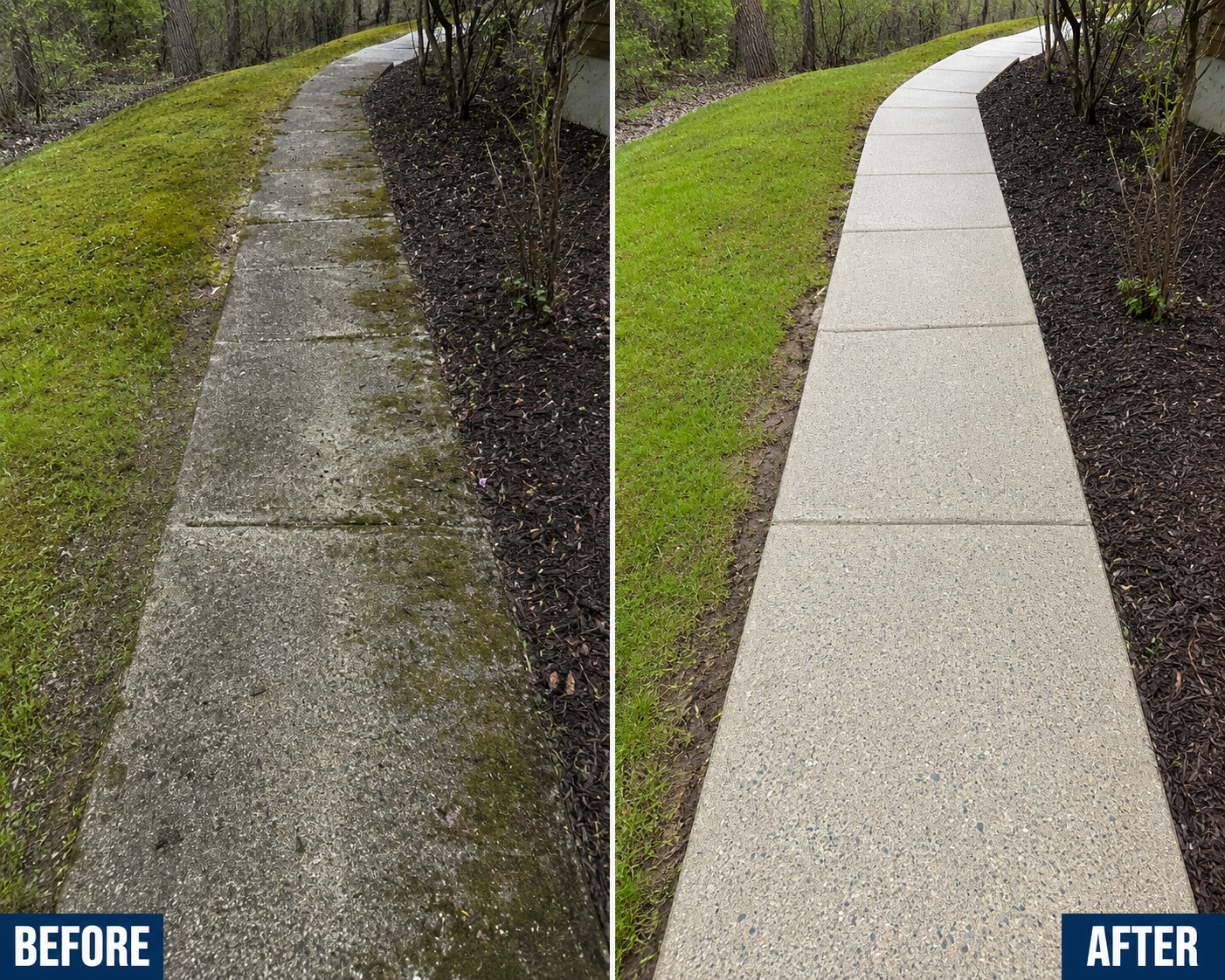
If your sidewalk gets slippery when wet, it is usually caused by algae, moss, mildew, lichen, or organic buildup growing deep inside the surface of the concrete. This is extremely common throughout the Hudson Valley because of our shade, humidity, tree coverage, wet seasons, and long winters.
Even if the sidewalk looks “mostly clean,” the surface can still become dangerously slick after rain, morning dew, snowmelt, or freezing temperatures. Older concrete is especially prone to this problem because it becomes more porous over time and traps moisture and organic growth inside the surface.
Why Sidewalks Become Slippery in the Hudson Valley
A lot of homeowners assume slippery sidewalks are caused by dirt alone, but that usually is not the real issue.
Most slippery sidewalks have microscopic organic growth living inside the pores of the concrete. Common causes include:
Green algae
Moss
Mildew
Black organic staining
Wet leaves and tree debris
Pollen buildup
Constant moisture retention
This becomes a major issue in the Hudson Valley because many homes are surrounded by trees and shade. Areas that stay damp longer after rain often become slick first.
North-facing sidewalks are especially common trouble spots because they receive less direct sunlight and stay wet longer throughout the day.
Concrete Is More Porous Than Most Homeowners Realize
Concrete may look solid, but it acts almost like a sponge over time.
As sidewalks age, the surface slowly opens up with tiny pores and surface wear. Water, dirt, algae spores, and organic material settle into these pores and begin growing below the visible surface.
That is why some sidewalks still feel slippery even after a homeowner sprays them off with a garden hose.
The problem is not always sitting on top. Often, it is embedded into the concrete itself.
Older sidewalks in places like Kingston, Woodstock, and Rhinebeck commonly deal with this because mature trees and constant shade create the perfect environment for buildup.
Why Slippery Sidewalks Become Dangerous
A slippery sidewalk is more than just annoying. It can become a serious safety issue.
The biggest danger is that algae and organic buildup become almost invisible when wet. A sidewalk may look normal but suddenly feel like ice after rain.
Common risks include:
Slip-and-fall injuries
Elderly visitors losing footing
Kids running on wet walkways
Delivery drivers slipping
Liability concerns for homeowners
Increased danger during freezing weather
This becomes even worse during late fall and winter in the Hudson Valley.
Organic buildup holds moisture longer than clean concrete. When temperatures drop overnight, those damp areas freeze faster and stay icy longer.
A shaded sidewalk with algae buildup can become extremely dangerous after freezing rain or snowmelt.
Winter Makes the Problem Worse
Many homeowners notice slippery sidewalks most during spring or summer rainstorms, but winter usually starts the problem.
Throughout the winter:
Moisture sits longer on shaded concrete
Snow piles trap water
Salt can break down surface layers
Freeze-thaw cycles open more pores
Organic growth survives underneath debris
Then spring arrives, temperatures rise, and algae growth explodes.
That is why many sidewalks suddenly become green and slippery by late spring in the Hudson Valley.
Signs Your Sidewalk Has Organic Buildup
Some signs are obvious, while others are easy to miss.
Look for:
Green coloring on the concrete
Black spotting
Dark streaking
Slimy texture after rain
Sidewalk staying wet longer than nearby areas
Moss growing in cracks
Areas that feel slick even when visually clean
Many homeowners first notice the issue when they almost slip carrying groceries or walking to the mailbox after rain.
Can You Clean a Slippery Sidewalk Yourself?
Sometimes, yes.
For light buildup, homeowners can often improve traction using:
A stiff-bristle brush
Concrete-safe cleaner
Mild detergent
A garden hose
Low-pressure rinsing
Cleaning early before heavy buildup forms is much easier than waiting several years.
However, there are a few major mistakes homeowners commonly make.
DIY Mistakes That Can Make Sidewalks Worse
One of the biggest mistakes is using too much pressure.
Aggressive pressure washing can:
Damage aging concrete
Leave wand marks
Create uneven cleaning patterns
Increase concrete porosity
Cause premature surface wear
Once the surface layer gets damaged, the concrete may actually hold moisture even more easily afterward.
Another common mistake is using bleach incorrectly.
Strong chemical mixes without proper rinsing can:
Harm nearby grass and landscaping
Leave uneven results
Damage surrounding surfaces
Create runoff concerns
Homeowners should also avoid cleaning slippery sidewalks while temperatures are near freezing because wet concrete can quickly turn icy.
When Hiring a Professional Makes Sense
Professional cleaning usually makes sense when:
The sidewalk is extremely slippery
Heavy algae or moss is present
The concrete is older
The area stays shaded year-round
There are trip hazards or safety concerns
The buildup keeps returning quickly
Professional surface cleaning equipment helps clean evenly without leaving heavy streaks or damaging the surface.
A professional can also determine whether the issue is:
Organic growth
Permanent staining
Concrete deterioration
Drainage problems
Shade-related moisture retention
That matters because not every dark stain can be fully removed.
What Good Contractors Do Differently
Not all pressure washing companies clean concrete properly.
A good contractor should:
Use the correct pressure for the surface
Understand concrete porosity
Pre-treat organic growth correctly
Protect nearby landscaping
Avoid leaving visible cleaning marks
Explain realistic expectations
Be cautious of companies that:
Promise “brand new” results on severely aged concrete
Use extremely high pressure immediately
Give vague pricing
Cannot explain their cleaning process
Do not carry insurance
Rush through the work too quickly
Extremely cheap pricing can sometimes mean rushed cleaning, poor equipment, or shortcuts that leave the concrete damaged.
Hudson Valley Homes Deal With This Constantly
This is one of the most common issues homeowners deal with throughout the Hudson Valley.
Properties surrounded by:
Trees
Wet landscaping
Retaining walls
Creeks
Shade
North-facing walkways
usually experience faster algae growth and slippery surfaces.
Homes in older neighborhoods especially tend to have mature landscaping that keeps sidewalks damp longer.
Many homeowners are surprised how much safer and brighter a properly cleaned walkway can feel afterward.
If your sidewalk becomes slippery every time it rains, the issue usually will not improve on its own. Organic growth tends to keep spreading deeper into the surface over time.
Freedom Powerwash provides professional sidewalk and concrete cleaning services throughout the Hudson Valley using surface-appropriate cleaning methods designed to improve traction while helping protect aging concrete from unnecessary damage.
Request a fast, no-pressure quote today through our online form at Get Your Fast Quote Here or call/text 845-812-3222 to speak directly with Freedom Powerwash.
FAQ Section
Why is my sidewalk slippery even when it looks clean?
Organic growth like algae and mildew can live deep inside porous concrete and become slick when wet, even if the surface does not look heavily stained.
Is slippery concrete dangerous?
Yes. Wet algae-covered concrete can become extremely slippery and increase the risk of falls, especially for children, elderly visitors, and delivery drivers.
Does pressure washing fix slippery sidewalks?
Proper cleaning can significantly improve traction by removing algae and organic buildup. However, older damaged concrete may still have some texture issues afterward.
Why does my sidewalk stay wet longer than others?
Shade, poor drainage, tree coverage, and concrete porosity can all cause sidewalks to hold moisture longer.
Can algae permanently damage concrete?
Over time, constant moisture and organic growth can contribute to surface deterioration and increased porosity.
Is bleach safe for cleaning sidewalks?
Improper bleach use can damage landscaping and surrounding surfaces. Concrete cleaning chemicals should always be used carefully and rinsed properly.
How often should sidewalks be professionally cleaned?
Most Hudson Valley properties benefit from sidewalk cleaning every 1 to 3 years depending on shade, moisture, and tree coverage.
Why do sidewalks become more slippery in winter?
Moisture trapped inside organic buildup freezes faster during cold weather, creating icy and dangerous surfaces.


