
What Happens If You Never Clean Your Roof?
What Happens If You Never Clean Your Roof?
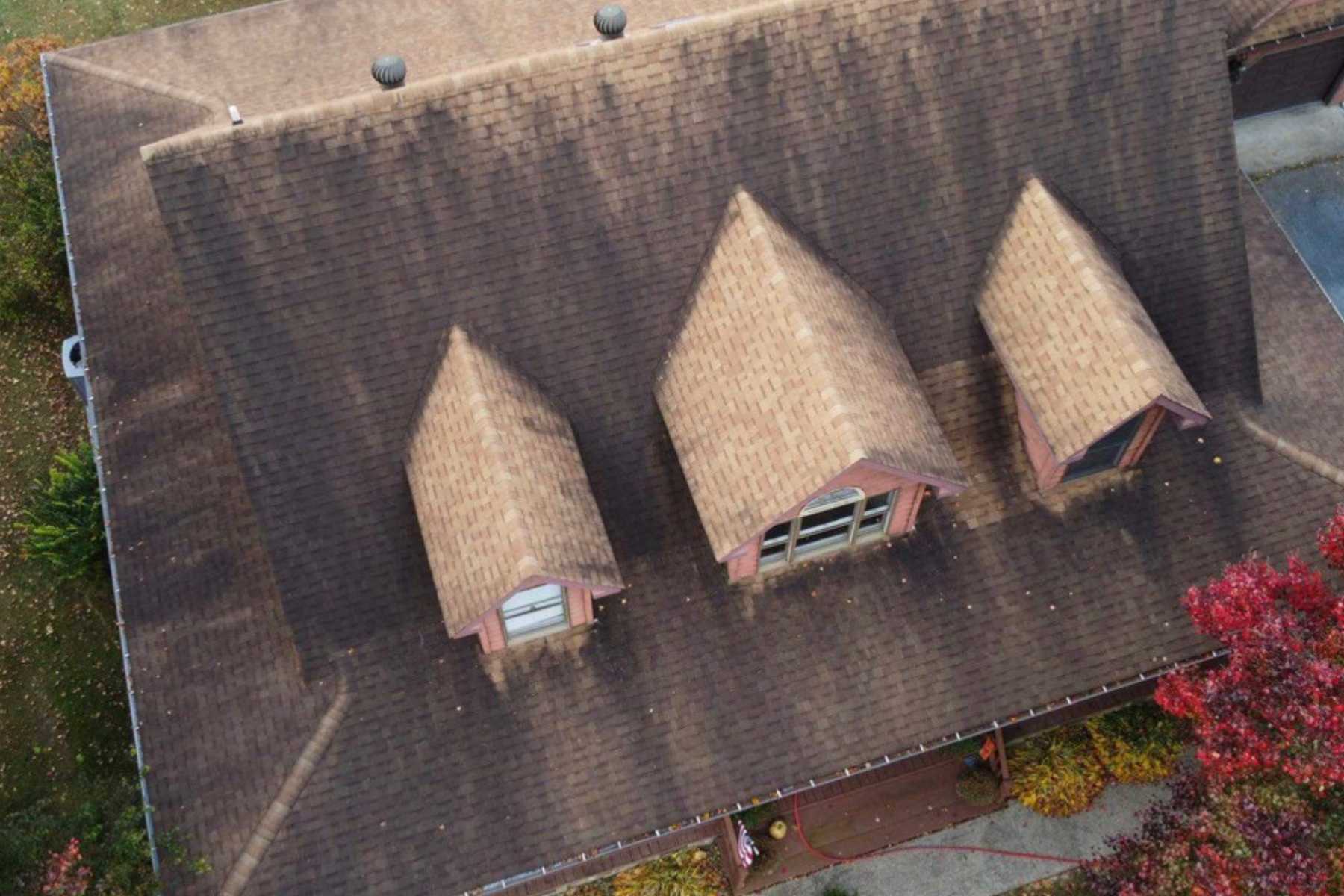
If you never clean your roof, algae, moss, lichen, and organic buildup can slowly damage the shingles, trap moisture, shorten the roof’s lifespan, and hurt your home’s curb appeal. In the Hudson Valley, shaded roofs surrounded by trees often develop black streaks and moss much faster because of the region’s moisture, humidity, and seasonal weather patterns.
Over time, what starts as a cosmetic issue can turn into premature roof deterioration, higher repair costs, and even lower property value if the roof begins to look neglected.
Why Roofs in the Hudson Valley Get Dirty So Quickly
Homes throughout Kingston, Woodstock, Rhinebeck, Saugerties, and other Hudson Valley towns deal with ideal conditions for roof algae growth. Heavy tree coverage, damp mornings, shade, pollen, and long wet seasons all create the perfect environment for organic buildup.
The most common issue homeowners notice is black streaking. Those black streaks are usually caused by a bacteria-based algae called Gloeocapsa magma. Once it starts growing, it slowly spreads across the roof and feeds on the limestone filler inside many asphalt shingles.
Moss and lichen are even more aggressive. Unlike algae, they physically attach themselves to the roof surface and hold moisture against the shingles for long periods of time.
A roof may still be structurally sound underneath, but years of ignored buildup can slowly accelerate aging.
Algae Spreads Faster Than Most Homeowners Realize
One of the biggest misconceptions homeowners have is thinking roof algae is just dirt or harmless discoloration.
In reality, algae spreads over time. It often begins on the shaded side of the roof, especially under tree lines or near areas with poor airflow. Then it slowly works its way across the shingles.
You may notice:
Black streaks getting darker every year
Sections of the roof staying damp longer
Green moss forming near edges or valleys
More staining after rainy seasons
Uneven roof appearance from the street
In many Hudson Valley neighborhoods with mature trees, roofs can begin showing noticeable algae staining in just a few years.
The longer it sits, the harder it becomes to restore the roof’s appearance safely.
Moisture Retention Is One of the Biggest Problems
A clean roof dries faster after rain. A roof covered in algae, moss, and debris does not.
Organic buildup acts like a sponge. Moss especially traps moisture against the shingles and can keep areas wet for extended periods. In freeze-thaw climates like New York, that moisture becomes a much bigger problem.
Constant moisture exposure can contribute to:
Premature shingle aging
Curling shingles
Granule loss
Increased roof brittleness
Ice dam concerns in winter
Wood rot near vulnerable areas
Moss growth around flashing and valleys
The roof may not leak immediately, but long-term moisture exposure increases the chances of future problems.
Roof Algae and Moss Can Shorten Shingle Life
Many homeowners are surprised to learn that roof manufacturers generally do not recommend pressure washing asphalt shingles.
High pressure can remove protective granules from the roof surface, which shortens the life of the shingles. That is why professional roof cleaning is typically performed using low-pressure soft washing methods designed to treat the organic growth without blasting the roof.
The real issue is that ignoring algae and moss for years can also reduce roof lifespan.
Moss can lift shingles slightly as it grows underneath edges. Lichen can root itself deeply into the surface. Algae can continue feeding on materials within the shingles over time.
Even if the damage happens slowly, the roof may age unevenly and require replacement earlier than expected.
What Happens if Moss Gets Out of Control?
Moss is one of the worst things homeowners can ignore on a roof.
Once moss thickens, it can:
Trap leaves and debris
Hold moisture against the roof
Lift shingle edges
Block water flow
Increase deterioration around flashing
Create slippery conditions for maintenance
Some homeowners try scraping moss off with brushes or tools. Unfortunately, aggressive scraping can damage shingles and remove granules.
Even “light brushing” still removes some granules from asphalt shingles. That is why professional soft washing methods are designed to let the cleaning solution do the work instead of relying on force or pressure.
Property Value and Curb Appeal Concerns
A dirty roof can dramatically change how a home looks from the street.
Even beautiful homes in areas like New Paltz, Hyde Park, or Red Hook can appear older or poorly maintained when the roof is covered in black streaks or moss.
For homeowners thinking about selling, roof staining can:
Hurt curb appeal
Raise buyer concerns
Make the roof appear older than it is
Trigger inspection questions
Create worries about maintenance history
Some buyers immediately assume the roof needs replacement when they see heavy staining, even when the issue is mostly organic growth.
A properly cleaned roof can often improve the appearance of the home significantly without replacing the roof itself.
Can a Dirty Roof Affect Insurance or Inspections?
Sometimes, yes.
Every insurance company and inspector is different, but severe moss growth or visible roof deterioration can raise concerns during inspections or policy reviews.
Inspectors may question:
Roof maintenance history
Moisture retention
Shingle condition
Moss damage
Remaining roof lifespan
Even if the roof is structurally fine, heavy staining can create the impression that maintenance has been ignored.
Honest DIY Roof Cleaning Discussion
Some homeowners attempt roof cleaning themselves using store-bought cleaners, pump sprayers, or pressure washers.
There are a few important things to understand before trying that.
What Homeowners Can Safely Do
Remove loose leaves from gutters carefully
Trim overhanging branches when possible
Improve sunlight exposure
Use zinc or copper strips in some situations
Apply approved roof treatment products carefully from the ground if safely possible
What Often Goes Wrong
Walking on steep or wet roofs
Using pressure washers on shingles
Overmixing chemicals
Killing landscaping with runoff
Slipping from ladder use
Scraping shingles with brushes or tools
If a homeowner cannot safely keep both feet on the ground, roof cleaning usually becomes a job better left to professionals.
Roof work is one of the most dangerous parts of exterior cleaning.
What Professional Roof Cleaning Usually Looks Like
Professional roof cleaning is normally done using a soft washing process, not high pressure.
A cleaning solution is applied to treat the algae, moss, and organic buildup. The solution does the work over time rather than relying on force.
Some results improve immediately. Other staining continues to lighten gradually as weather and rain help rinse away dead organic growth naturally.
Homeowners should be cautious of contractors promising instant bright results by aggressively pressure washing or heavily scraping or brushing shingles.
Fast results are not always the safest results for the roof.
Hudson Valley Roofs Often Need More Maintenance
The Hudson Valley creates unique roof-cleaning challenges because of:
Heavy tree coverage
Long wet seasons
Shade
Moss-friendly conditions
Older homes
Humidity near wooded areas and water
Pollen buildup in spring
Homes in wooded areas around Woodstock, Saugerties, Rhinebeck, and Stone Ridge often develop algae and moss faster than homes with full sun exposure.
Some roofs may benefit from periodic cleaning every few years depending on:
Shade levels
Roof orientation
Nearby trees
Roof age
Moisture exposure
Contractor Red Flags Homeowners Should Watch For
Not every company cleans roofs correctly.
Before hiring anyone, homeowners should ask:
Do you pressure wash shingles?
Are you insured?
Do you protect landscaping?
Do you use roof-safe soft washing methods?
Do you walk aggressively on the roof?
Can you explain your process clearly?
Do you have real roof-cleaning experience?
Be cautious of:
Extremely low pricing
Contractors offering instant scraping
High-pressure roof washing
No proof of insurance
No explanation of the cleaning method
Companies that treat roof cleaning like basic pressure washing
Roof cleaning is not the same as blasting concrete.
The wrong method can shorten the life of the roof.
Black streaks, moss, and roof algae usually do not get better on their own. Freedom Powerwash provides professional roof cleaning throughout the Hudson Valley using safe soft washing methods designed to clean the roof without the risks of high-pressure damage.
Request a fast, no-pressure quote today through our online form at Get Your Fast Quote Here or call/text 845-812-3222 to speak directly with Freedom Powerwash.
FAQ Section
Can roof algae damage shingles?
Over time, algae can contribute to shingle deterioration by feeding on materials in the shingles and holding moisture against the roof surface.
Is moss bad for asphalt roofs?
Yes. Moss traps moisture and can lift shingle edges, increasing wear and roof deterioration over time.
Will pressure washing damage my roof?
Pressure washing asphalt shingles can remove protective granules and shorten roof life if done improperly.
How often should a roof be cleaned in the Hudson Valley?
It depends on shade, trees, and moisture exposure. Many homes in wooded areas develop buildup faster and may need cleaning every few years.
Can roof stains come back after cleaning?
Yes. Algae can eventually return over time, especially in shaded areas with heavy moisture.
Does roof cleaning help curb appeal?
Absolutely. A clean roof can make the entire home look newer and better maintained.
Can you estimate roof cleaning without visiting the property?
In many cases, yes. Freedom Powerwash can often use satellite imagery and roof measurements to provide preliminary estimates remotely if the roof is clearly visible.
Is roof cleaning safe for landscaping?
Professional soft washing companies should take steps to protect landscaping during the cleaning process.


