
What’s the Difference Between Soft Washing and Pressure Washing
What Homeowners Should Know
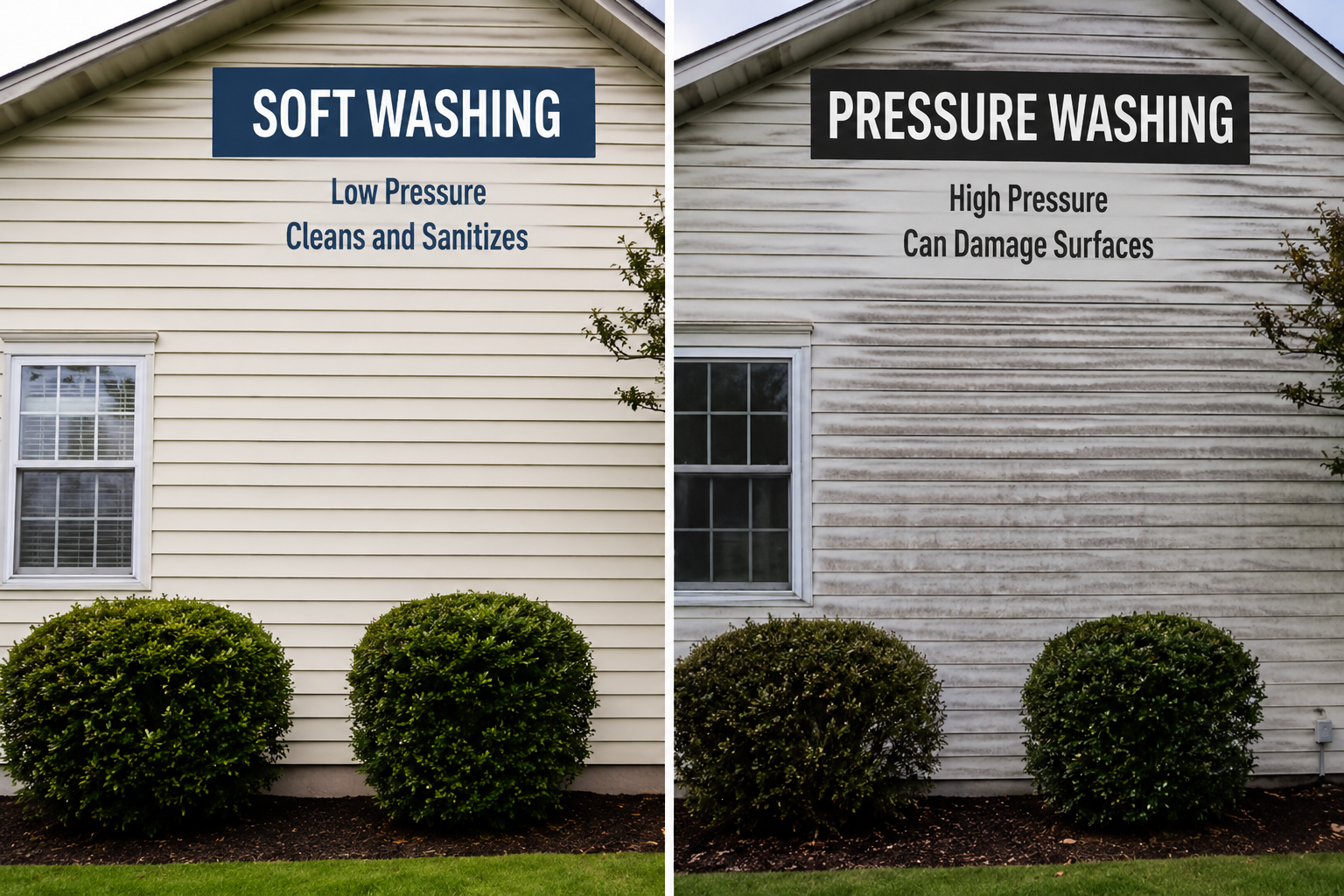
Soft washing and pressure washing are not the same thing, even though many homeowners in the Hudson Valley use the terms interchangeably. Soft washing uses low pressure and specialized cleaning solutions to kill algae, mold, mildew, and organic buildup safely. Pressure washing relies mostly on high water pressure to blast away dirt and surface stains.
For most homes, especially vinyl siding, painted surfaces, roofs, stucco, and older materials, soft washing is the safer and more effective method. Pressure washing still has an important place, but usually on harder surfaces like sidewalks, certain patios, and some commercial concrete areas where high pressure will not cause damage.
A lot of industry confusion comes from companies calling everything “pressure washing” even when they are actually soft washing the home.
Why Homeowners Get Confused About the Difference
If you ask ten homeowners in Kingston what pressure washing means, most will
probably describe cleaning a house with water blasting out of a wand. That is understandable because for years, almost every exterior cleaning company advertised itself as a “power washing” or “pressure washing” company.
The problem is that modern exterior cleaning has changed a lot.
Today, professional companies often use completely different cleaning methods depending on the surface. Cleaning a vinyl-sided house is very different from cleaning a sidewalk. Cleaning asphalt shingles is different from cleaning a retaining wall.
Using the wrong method can permanently damage a home.
That is why understanding the difference matters.
What Is Pressure Washing?
Pressure washing uses high-pressure water to remove dirt, grime, mud, loose debris, and some surface stains.
Typical pressure washing machines can produce anywhere from 2,000 to 4,000+ PSI (pounds per square inch). That is an incredible amount of force.
Pressure washing works best on strong, durable surfaces like:
Certain sidewalks
Some patios
Commercial concrete
Heavy equipment
Certain retaining walls
Some stone surfaces
Industrial areas
When used correctly, pressure washing can clean surfaces quickly and effectively.
When used incorrectly, it can destroy property fast.
What Is Soft Washing?
Soft washing uses low-pressure water combined with professional cleaning solutions designed to break down and kill organic growth like:
Algae
Mold
Mildew
Moss
Bacteria
Lichen
Instead of relying on brute force, soft washing relies on chemistry and dwell time.
The pressure used during soft washing is often similar to a regular garden hose.
That surprises many homeowners because they assume higher pressure means better cleaning. In reality, high pressure is often unnecessary and sometimes dangerous on residential homes.
Soft washing is commonly used for:
Vinyl siding
Roof cleaning
Painted wood
Stucco
Composite siding
Fences
Gutters
Delicate exterior surfaces
This is why professional house washing companies throughout the Hudson Valley usually soft wash homes rather than blast them with high pressure.
Why Soft Washing Is Usually Better for Homes
Most homes in Kingston, Rhinebeck, Woodstock, and surrounding Hudson Valley towns are not built to handle aggressive pressure washing.
Many homes have:
Older siding
Aging caulking
Vulnerable window seals
Painted surfaces
Oxidized vinyl
Soft wood trim
Hidden moisture issues
High pressure can force water behind siding and into wall cavities. It can also strip paint, damage trim, scar wood, and leave permanent oxidation marks on vinyl siding.
Soft washing avoids many of those risks.
Instead of trying to “blast” the dirt away, soft washing treats the root cause of the staining. That is especially important in the Hudson Valley where moisture, shade, pollen, and tree coverage create perfect conditions for algae and mildew growth.
A house may look dirty, but the green buildup is usually living organic material. If you only blast the surface without killing it properly, the growth often comes back faster.
That is another reason soft washing tends to last longer.
The Biggest Misunderstanding About Chemicals
A lot of homeowners hear the word “chemical” and immediately worry.
That is understandable.
But here is where the confusion starts.
Many people think pressure washing uses “just water” and soft washing uses “harsh chemicals.” In reality, almost every professional exterior cleaning method uses cleaning solutions of some kind.
Even many pressure washing jobs use detergents, degreasers, surfactants, or treatment products.
The real question is whether the chemicals are being used properly and safely.
Professional soft washing solutions are designed to target organic growth while being diluted correctly for the surface being cleaned. The key is proper training, proper ratios, surface knowledge, rinsing procedures, and plant protection.
An inexperienced company using high pressure can often cause more damage than a trained company using properly applied soft washing solutions.
Common Damage From Improper Pressure Washing
This is where homeowners should pay attention.
Just because someone owns a pressure washer does not mean they understand exterior cleaning.
Some common problems caused by improper pressure washing include:
Water Intrusion
High pressure can push water behind siding, around windows, under trim, and into wall systems.
Sometimes the damage is not immediately visible.
Vinyl Oxidation Damage
Older vinyl siding often develops oxidation, which is a chalky layer on the surface. High pressure can leave streaks, tiger-striping, or permanent marks.
This is extremely common when inexperienced contractors use too much pressure.
Wood Damage
Pressure washing can gouge wood, shred fibers, and permanently scar decks or fences.
Roof Damage
Roofs should never be pressure washed. High pressure can remove granules from shingles and shorten roof life.
Professional roof cleaning is typically done with specialized soft washing methods.
Paint Removal
Improper pressure can strip paint and expose bare surfaces.
Sometimes homeowners do not notice until the siding dries.
Why the Hudson Valley Creates More Exterior Cleaning Problems
Homes throughout the Hudson Valley deal with conditions that make soft washing especially important.
Areas like Kingston, Saugerties, Woodstock, and Stone Ridge have:
Heavy tree coverage
Long wet seasons
High pollen levels
Shaded siding
Moss growth
Humid summer conditions
Older homes with delicate materials
North-facing siding often stays damp longer and grows algae faster.
Many homeowners think their siding is “failing” when it is actually organic buildup that needs proper cleaning.
The same thing happens on roofs. Those black streaks are often algae, not dirt.
Using the wrong cleaning method in these conditions can create more problems than it solves.
DIY Pressure Washing vs DIY Soft Washing
Some homeowners successfully clean parts of their property themselves.
Others accidentally create expensive repairs.
If you are planning DIY exterior cleaning, here are some honest guidelines.
Safer DIY Jobs
A homeowner may reasonably handle:
Small patio furniture
Some ground-level sidewalks
Certain small concrete areas
Light rinsing tasks
Basic maintenance cleaning
High-Risk DIY Jobs
DIY becomes much riskier when dealing with:
Two-story homes
Roofs
Oxidized siding
Ladders
Electrical areas
Delicate surfaces
High-pressure equipment
Chemical mixing
If your feet cannot safely stay on the ground, it is usually not worth the risk.
Many homeowners also underestimate how strong professional equipment actually is. A commercial-grade machine can easily cut skin, damage siding, or break windows if handled improperly.
Questions Homeowners Should Ask Before Hiring a Company
Not every company cleaning homes understands soft washing correctly.
Some companies still rely almost entirely on pressure because it is faster or because that is the only method they know.
Before hiring someone, ask:
Do you soft wash homes?
What pressure levels do you use?
How do you protect landscaping?
Are you insured?
How do you handle oxidation risks?
Do you pressure wash roofs?
What surfaces require low pressure?
Can you explain your process clearly?
If a contractor cannot explain the difference between soft washing and pressure washing clearly, that is a red flag.
Another warning sign is extremely cheap pricing. Professional exterior cleaning involves commercial insurance, equipment maintenance, fuel, chemical costs, training, and surface knowledge. A low price sometimes means shortcuts are being taken somewhere.
So Which Method Is Better?
Neither method is “better” for everything.
The right method depends on the surface.
That is the real answer.
Pressure washing is excellent for some durable surfaces.
Soft washing is safer and more effective for most residential homes.
Professional exterior cleaning today is really about understanding which method fits each material properly.
The best contractors know when to use pressure, when to avoid pressure, and when chemistry matters more than force.
Many homeowners in the Hudson Valley are surprised to learn their home may not need high pressure at all. Freedom Powerwash uses surface-specific cleaning methods designed to safely clean siding, roofs, and exterior surfaces while reducing the risks of damage from improper pressure washing.
Request a fast, no-pressure quote today through our online form at Get Your Fast Quote Here or call/text 845-812-3222 to speak directly with Freedom Powerwash.
FAQ Section
Is soft washing the same as pressure washing?
No. Soft washing uses low pressure and cleaning solutions, while pressure washing relies mostly on high-pressure water.
Will soft washing damage my siding?
When done properly, soft washing is considered much safer for siding than aggressive pressure washing.
Can pressure washing force water behind siding?
Yes. Improper pressure washing can push water behind siding and around windows.
Should roofs be pressure washed?
Most asphalt shingle roofs should not be pressure washed. Professional roof cleaning is usually done with soft washing methods.
Why does my house turn green so quickly in the Hudson Valley?
Moisture, tree coverage, pollen, humidity, and shade create ideal conditions for algae and mildew growth.
Does soft washing use bleach?
Many professional soft washing systems use diluted sodium hypochlorite solutions combined with surfactants and proper rinsing methods to kill organic growth safely.
How long does soft washing last?
Results vary depending on shade, moisture, and tree coverage, but soft washing often lasts longer because it kills the organic growth instead of only removing surface staining.
Can I rent a pressure washer and clean my own house?
You can, but there are risks involving oxidation damage, water intrusion, ladder safety, and surface damage. Two-story homes and roofs are usually best left to professionals.
Why do some companies still call everything pressure washing?
The term “pressure washing” became a general catch-all phrase over the years, even though many companies now use soft washing for homes.


