
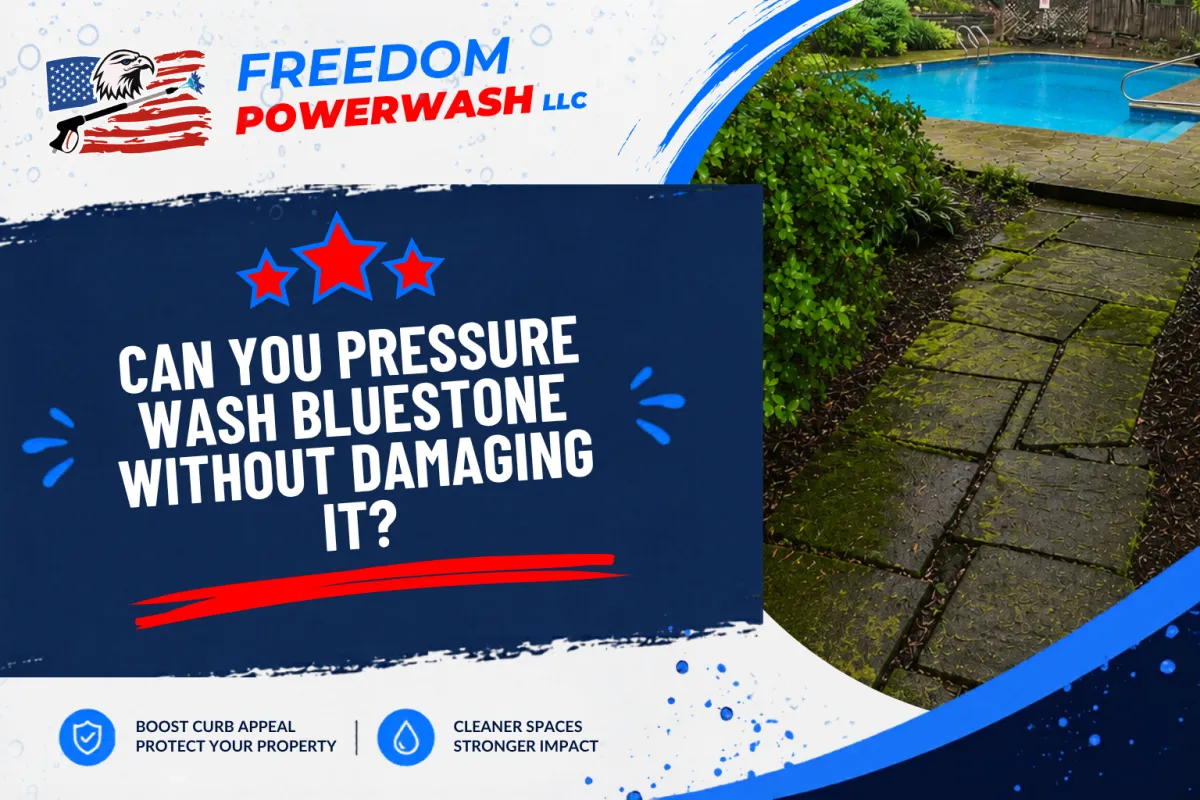
Can You Pressure Wash Bluestone Without Damaging It?
Hudson Valley Homeowner Guide
Yes, bluestone can be pressure washed safely, but it can also be permanently damaged if the wrong pressure, tips, chemicals, or cleaning methods are used. Bluestone is more delicate than many homeowners realize, especially older bluestone patios, walkways, and pool areas commonly found throughout the Hudson Valley.
Too much pressure can leave visible lines, surface etching, flaking, or color changes that cannot easily be repaired. In many cases, lower pressure combined with the correct cleaners and technique is the safer option.
Why Bluestone Is More Sensitive Than Most People Think
Bluestone is popular throughout the Hudson Valley because it fits the natural look of homes in places like Kingston, Woodstock, Rhinebeck, Stone Ridge, and New Paltz. You see it everywhere on patios, front walkways, garden paths, and pool decks.
The problem is that many homeowners assume bluestone is as tough as concrete. It is not.
Bluestone is a natural stone, and natural stone has variations in density, layers, texture, and mineral content. Some pieces are harder than others. Some older bluestone can already have weakened surfaces from years of freeze-thaw cycles, moisture, salt exposure, moss growth, or improper sealing.
That means aggressive pressure washing can cause damage much faster than people expect.
What Damage Can Improper Pressure Washing Cause?
Improper pressure washing can ruin bluestone surprisingly fast, especially when using high-powered homeowner machines or inexperienced contractors.
Common damage includes:
Surface Etching
This is one of the biggest problems. High pressure can strip away the top layer of the stone, leaving lighter spots, rough textures, or uneven cleaning marks.
Once bluestone is etched, it usually cannot simply be washed away or reversed.
Pressure Washer Lines
These are the zebra-stripe-looking marks you sometimes see across patios and walkways. They happen when someone cleans too closely or uses uneven passes.
Bluestone tends to show these marks badly because natural stone reflects light differently than concrete.
Flaking and Surface Delamination
Some bluestone naturally contains layers. Excessive pressure can start separating those layers, causing peeling or flaking over time.
This becomes even more common on older patios throughout the Hudson Valley where moisture gets trapped during winter freezes.
Joint Sand Damage
Many bluestone patios use polymeric sand or mortar joints. Aggressive pressure can remove those joints, loosen stones, and create drainage issues.
Sealer Damage
Some pressure washing methods can strip or unevenly remove sealers, leaving blotchy-looking areas that stand out after drying.
Why Hudson Valley Bluestone Often Gets Dirtier Faster
Bluestone in the Hudson Valley deals with conditions that encourage algae, moss, mildew, and organic buildup.
A few major reasons include:
Heavy tree coverage
Shaded patios
Moist spring and fall weather
Wet leaves sitting on stone
North-facing surfaces
Humid summers
Moss growth near retaining walls and gardens
Homes in wooded areas like Woodstock, Hurley, Rhinebeck, and Stone Ridge often see green buildup appear much faster than homes in open sunny areas.
That buildup can also make bluestone slippery when wet, especially around pool decks, stairs, and walkways.
Can Bluestone Be Soft Washed Instead?
In many cases, yes.
Not every bluestone surface needs aggressive pressure. Professional cleaning often involves a combination of:
Low-pressure rinsing
Surface-safe cleaners
Controlled pressure levels
Proper dwell time
Gentle surface cleaning techniques
The goal is to remove algae, mildew, moss, dirt, and organic buildup without damaging the stone itself.
This is especially important for decorative bluestone around high-end homes or older historic properties common throughout the Hudson Valley.
What About Sealing Bluestone?
Sealing is where many homeowners accidentally create long-term problems.
Some sealers can help reduce staining and moisture absorption. Others can trap moisture, peel, discolor, or create uneven appearances if applied incorrectly.
A few things homeowners should know:
Not All Bluestone Should Be Sealed
Some bluestone surfaces perform perfectly fine without sealing, especially if drainage and maintenance are good.
Wet Stone Should Never Be Sealed
If moisture gets trapped underneath, whitening, hazing, or peeling can happen later.
Cheap Sealers Often Fail Early
Low-quality sealers can wear unevenly and make the patio look patchy within a year or two.
Glossy Sealers Change the Look
Many homeowners expect a natural matte stone appearance. Some sealers create a shiny finish that completely changes how bluestone looks.
DIY Bluestone Cleaning Tips for Homeowners
Some light bluestone cleaning can absolutely be handled by homeowners if done carefully.
A safer DIY approach usually includes:
Remove leaves and debris first.
Wet surrounding plants before using cleaners.
Use a lower-pressure setting.
Stay farther back from the surface.
Test a small hidden area first.
Avoid turbo nozzles or pinpoint tips.
Never hold pressure in one spot.
Work evenly in sections.
Rinse thoroughly.
Let the stone fully dry before judging results.
For light dirt and algae, sometimes a simple soft-bristle brush and proper cleaner work better than heavy pressure.
Common DIY Mistakes That Damage Bluestone
These are the biggest mistakes professionals see:
Using Too Much PSI
Many homeowner machines are far more aggressive than needed.
Using a Turbo Nozzle
Turbo tips can scar bluestone almost instantly.
Cleaning Too Close
Getting too close increases cutting power dramatically.
Using Harsh Chemicals
Some acidic cleaners can discolor natural stone.
Ignoring Existing Damage
Loose edges, cracks, or flaking areas can worsen quickly during cleaning.
When Hiring a Professional Makes Sense
Professional cleaning usually makes sense when:
The patio is heavily stained or slippery
The bluestone is older or expensive
There are drainage issues
Moss buildup is severe
The surface has already been sealed
The patio is uneven or delicate
You are unsure how much pressure is safe
An experienced exterior cleaning company should understand surface-specific cleaning, not just blast everything with maximum pressure.
Questions Homeowners Should Ask Before Hiring Someone
Before hiring anyone to clean bluestone, ask:
Have you cleaned bluestone before?
What pressure levels do you use?
Do you test small areas first?
How do you protect surrounding landscaping?
What cleaners are being used?
Have you dealt with older Hudson Valley stone patios?
Are you insured?
Do you understand sealing considerations?
If someone immediately says they clean everything at full pressure, that is a major red flag.
Cheap Pressure Washing Can Become Expensive Fast
Bluestone replacement is not cheap.
Improper cleaning can lead to:
Permanent cosmetic damage
Loose stones
Joint failures
Increased moisture intrusion
Premature aging
Expensive repairs or replacement
A low quote sometimes becomes very expensive later if the surface gets scarred or damaged.
That is why surface knowledge matters more than simply owning a pressure washer.
The Bottom Line on Cleaning Bluestone Safely
Bluestone absolutely can be cleaned safely, but it requires the right approach. The safest method depends on the stone condition, age, buildup level, drainage, previous sealing, and overall surface health.
In the Hudson Valley especially, older stone surfaces deal with heavy moisture, moss, algae, freeze-thaw cycles, and shaded conditions that require a more careful cleaning process than many homeowners realize.
A slower, surface-specific cleaning approach usually protects the stone far better than aggressive high pressure.
Bluestone can add serious beauty and value to a Hudson Valley property, but improper cleaning can permanently damage the surface. Freedom Powerwash uses surface-specific cleaning methods designed to safely clean natural stone while protecting the appearance and integrity of your patio, walkway, or outdoor living space.
Request a fast, no-pressure quote today through our online form at Get Your Fast Quote Here or call/text 845-812-3222 to speak directly with Freedom Powerwash.
FAQ
Can pressure washing damage bluestone?
Yes. Too much pressure can etch, scar, lighten, or weaken the surface of bluestone.
What PSI is safe for bluestone?
There is no one-size-fits-all answer. It depends on the age, condition, density, and buildup on the stone.
Should bluestone be sealed after cleaning?
Sometimes. It depends on the condition of the stone, drainage, and the desired appearance.
Why does bluestone get slippery?
Algae, moss, mildew, and organic buildup create slippery conditions, especially in shaded Hudson Valley areas.
Can moss damage bluestone?
Yes. Moss holds moisture against the stone and can contribute to deterioration over time.
Is soft washing better for bluestone?
In many cases, lower pressure combined with proper cleaners is safer than aggressive pressure washing.
How often should bluestone be cleaned in the Hudson Valley?
Most properties benefit from cleaning every 1 to 3 years depending on shade, moisture, trees, and buildup.
Can you remove rust stains from bluestone?
Some rust stains can improve, but results depend on how deep the staining has penetrated the stone.


