
Is Roof Cleaning Worth It or Is It a Waste of Money?
Is Roof Cleaning Worth It or Is It a Waste of Money?
What Hudson Valley Homeowners Should Know
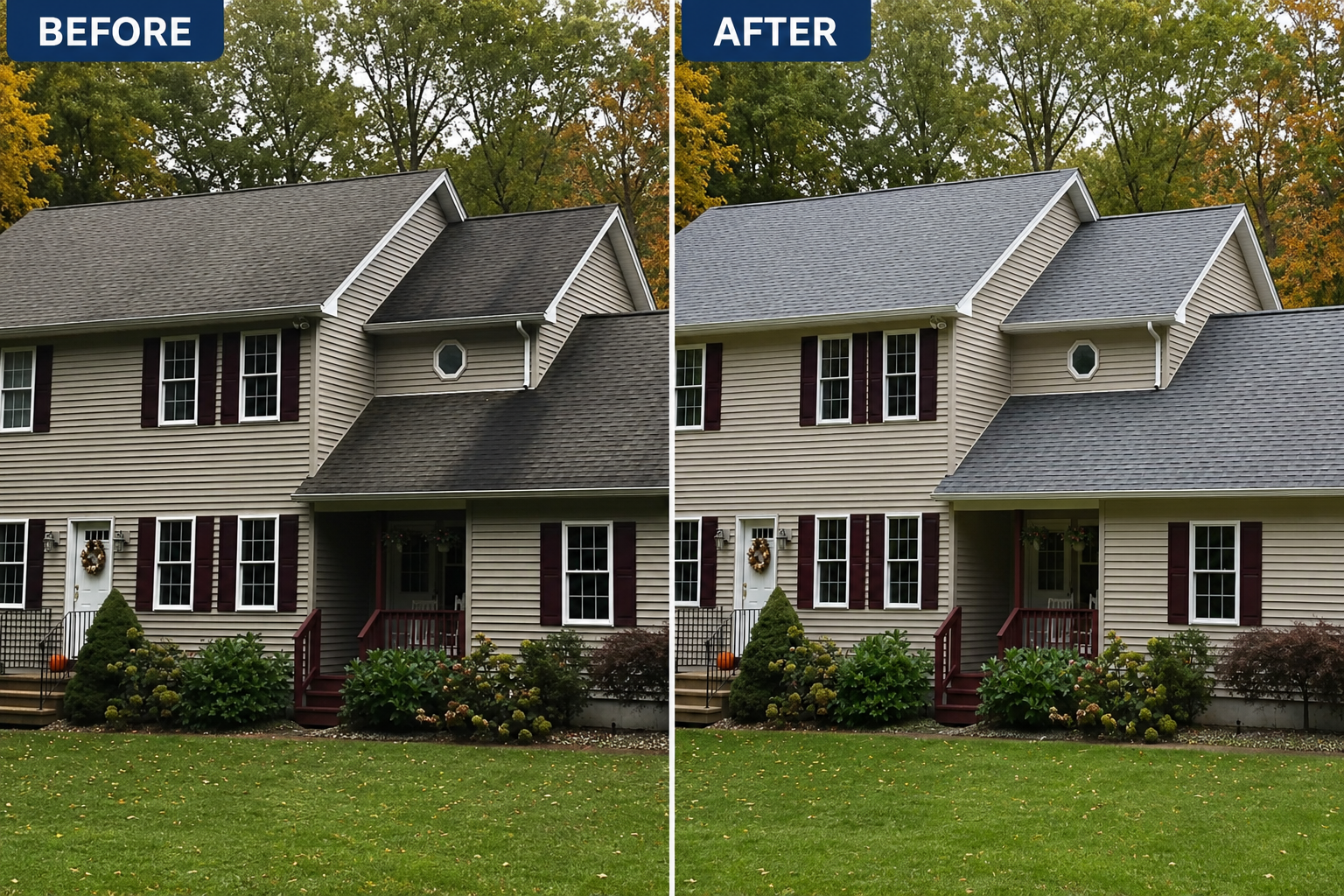
Yes, roof cleaning is usually worth it if your roof has black streaks, moss, lichen, or algae growth and the shingles are still structurally sound. Proper roof cleaning can improve curb appeal, help preserve the roof, and delay a very expensive roof replacement.
But the key word is proper.
According to the Asphalt Roofing Manufacturers Association (ARMA), asphalt shingle roofs should be cleaned using a low-pressure chemical application method, not pressure washing, brushing, scraping, or physical agitation. The goal is to kill the algae, moss, and lichen and allow weather and rainfall to naturally release the dead growth over time.
The Biggest Lie Homeowners Get Told About Roof Cleaning
A lot of roof cleaning companies sell homeowners instant gratification.
The roof looks cleaner immediately, so the homeowner assumes the process must have been better.
But on asphalt shingles, instant results are often created using physical force:
Brushing
Scraping
Pressure washing
Surface agitation
“Light pressure”
Manual moss removal
The problem is that asphalt shingles are covered with protective granules, and those granules are what protect the roof from UV exposure and premature deterioration.
Once those granules are removed, they do not come back.
Even gentle brushing removes granules. Even careful scraping removes granules. Even mild agitation between shingles removes granules.
That is simply the reality of how asphalt shingles are built.
What ARMA Actually Recommends
The proper manufacturer-supported approach is not about force.
It is about treatment.
The Asphalt Roofing Manufacturers Association (ARMA) roof cleaning guidance explains that asphalt roofs should be cleaned using a low-pressure application of cleaning solution designed to kill algae and moss without damaging the shingles.
Their guidance specifically warns against pressure washing asphalt shingles because it can damage the roofing system.
The cleaning solution is applied to the roof, allowed to react and kill the organic growth, and then nature gradually rinses the dead material away over time.
That slower process is safer for the roof.
Why Proper Roof Cleaning Does NOT Always Look Instantly Perfect
This is where many homeowners misunderstand the process.
When a roof is cleaned correctly:
The algae dies
The moss dies
The lichen dies
Organic growth begins breaking down
But dead moss and lichen may not instantly disappear the same day.
Instead:
Moss often turns white or brown first
Lichen loosens over time
Rainfall gradually releases dead growth naturally
The roof continues improving over the following weeks and months
That is often exactly what should happen with a properly treated asphalt roof.
A roof that looks “perfect immediately” after aggressive scraping or brushing may actually have suffered permanent granule loss during the process.
Why Granule Loss Matters So Much
Most homeowners never think about roof granules until they start finding them in gutters.
But those granules are critical.
They help:
Protect shingles from UV damage
Slow roof aging
Shield the asphalt layer underneath
Extend roof lifespan
Protect against weather exposure
When contractors aggressively brush or scrape moss and lichen from shingles, granules come off with it.
There is really no way around that.
Even if the contractor is experienced.
Even if they are careful.
Even if they use “light pressure.”
Even if they say they are only removing the top layer.
Physical agitation on an asphalt shingle roof removes granules. Period.
That is why ARMA recommends chemical treatment methods instead of force-based cleaning methods.
What Are the Black Streaks on My Roof?
The black streaks are usually caused by a bacteria called Gloeocapsa magma.
It thrives in humid environments like the Hudson Valley and feeds on the limestone filler commonly found in asphalt shingles.
You will usually see it worse on:
North-facing roof sections
Shaded homes
Tree-covered properties
Damp roof areas
Over time, that bacteria traps moisture and contributes to additional organic growth.
Moss and lichen are even more aggressive because they physically attach to and grow into the roof surface.
Roof Cleaning vs Roof Replacement
This is where roof cleaning often makes financial sense.
Many roofs in the Hudson Valley are structurally okay but simply stained with algae and moss growth.
Homeowners sometimes think they need a new roof when what they really need is proper maintenance.
A professional roof replacement can easily cost:
$15,000
$20,000
$30,000 or more
Meanwhile, a proper soft wash roof treatment may help preserve the roof already there while improving the home's appearance dramatically.
Roof cleaning is not magic. It cannot fix:
Leaks
Structural damage
Rotten decking
Missing shingles
Severe curling
Major deterioration
But if the roof still has usable life left, proper cleaning is often a far better investment than premature replacement.
Why Hudson Valley Roofs Grow Moss So Fast
The Hudson Valley creates ideal conditions for roof growth because of:
Heavy tree coverage
Moisture retention
Long wet seasons
Shade
Humidity
Pollen buildup
Homes in places like Woodstock, Saugerties, Rhinebeck, and Stone Ridge often experience faster roof staining because wooded lots keep roofs damp longer.
That is why many homeowners see black streaks and moss return faster here than in drier climates.
DIY Roof Cleaning: What Homeowners Should Know
Most homeowners should be very cautious about cleaning their own roofs.
The biggest DIY mistakes include:
Pressure washing
Brushing shingles
Scraping moss
Walking improperly on roofs
Overmixing chemicals
Ignoring landscaping protection
A lot of online videos actually demonstrate methods that shorten roof life.
If a homeowner cannot safely keep both feet on the ground, it usually is not worth the risk.
And even if a DIY attempt “looks better” immediately, that does not mean the roof was cleaned safely.
Questions Homeowners Should Ask Before Hiring a Roof Cleaner
Before hiring a roof cleaning company, homeowners should ask:
Are you using pressure washing?
Are you brushing or scraping the roof?
Are you physically removing moss?
Do you follow ARMA recommendations?
How do you protect shingles from granule loss?
How do you protect landscaping?
What should realistic results look like?
A trustworthy company should explain that safe roof cleaning focuses on killing the growth properly, not aggressively forcing it off the roof for instant cosmetic results.
Is Roof Cleaning Worth It?
For many Hudson Valley homeowners, yes.
But only if the roof is cleaned the correct way.
Safe roof cleaning is not about blasting, brushing, or scraping shingles clean. It is about applying the proper treatment, killing the organic growth safely, and allowing Mother Nature to gradually rinse the dead material away over time.
That slower process protects the roof instead of sacrificing shingle life for instant gratification.
Black streaks, moss, and lichen can make a roof look older while also trapping moisture against the shingles. Freedom Powerwash provides low-pressure roof cleaning throughout the Hudson Valley using soft washing methods designed to treat and kill organic growth without the risks of pressure washing, brushing, or aggressive scraping.
Request a fast, no-pressure quote today through our online form at Get Your Fast Quote Here or call/text 845-812-3222 to speak directly with Freedom Powerwash.
FAQ Section
Does ARMA recommend pressure washing asphalt shingles?
No. ARMA specifically warns against pressure washing asphalt shingles because it can damage the roof surface.
Does brushing a roof remove granules?
Yes. Even light brushing or scraping can remove protective granules from asphalt shingles.
Why do some roof cleaners scrape moss off?
Because it creates instant visual results, even though physical agitation can shorten roof life.
What is the safest way to clean an asphalt shingle roof?
The safest method is low-pressure chemical treatment designed to kill algae and moss while minimizing physical damage to shingles.
What happens after the roof treatment is applied?
The organic growth dies, loosens over time, and rainfall gradually helps rinse it away naturally.
What is Gloeocapsa magma?
It is the bacteria responsible for the black streaks commonly seen on asphalt roofs.
Will my roof look perfect immediately after proper cleaning?
Not always. Moss and lichen may continue releasing naturally over time after treatment.
Can roof cleaning extend roof life?
Proper maintenance may help reduce moisture retention and premature deterioration caused by algae, moss, and lichen buildup.
Can roof cleaning be quoted remotely?
Often yes. Freedom Powerwash can frequently estimate roofs using satellite imagery and property photos when visibility is clear enough.


