

Can Mold and Algae Damage My Siding in the Hudson Valley? | What Homeowners Should Know
Can Mold and Algae Damage My Siding in the Hudson Valley?
What Homeowners Should Know
Yes, mold, algae, mildew, and other organic buildup can damage your siding over time if they are ignored. In the Hudson Valley, homes surrounded by trees, shade, moisture, and pollen often develop green or black buildup much faster than homeowners expect. While the growth itself may start as a cosmetic issue, long-term buildup can lead to staining, oxidation problems, trapped moisture, premature aging, and even hidden deterioration behind the siding in some cases.
The good news is that most siding problems caused by mold and algae are preventable with proper maintenance and safe cleaning methods.
Why Mold and Algae Grow So Fast on Hudson Valley Homes
Homes throughout Kingston, Woodstock, Saugerties, Rhinebeck, New Paltz, and other Hudson Valley towns deal with a perfect environment for organic growth.
A few common reasons include:
Heavy tree coverage
Long periods of shade
Moisture trapped from humidity and rain
Pollen buildup in spring
North-facing siding that gets little sunlight
Gutters overflowing near siding
Homes located near streams, ponds, or wooded areas
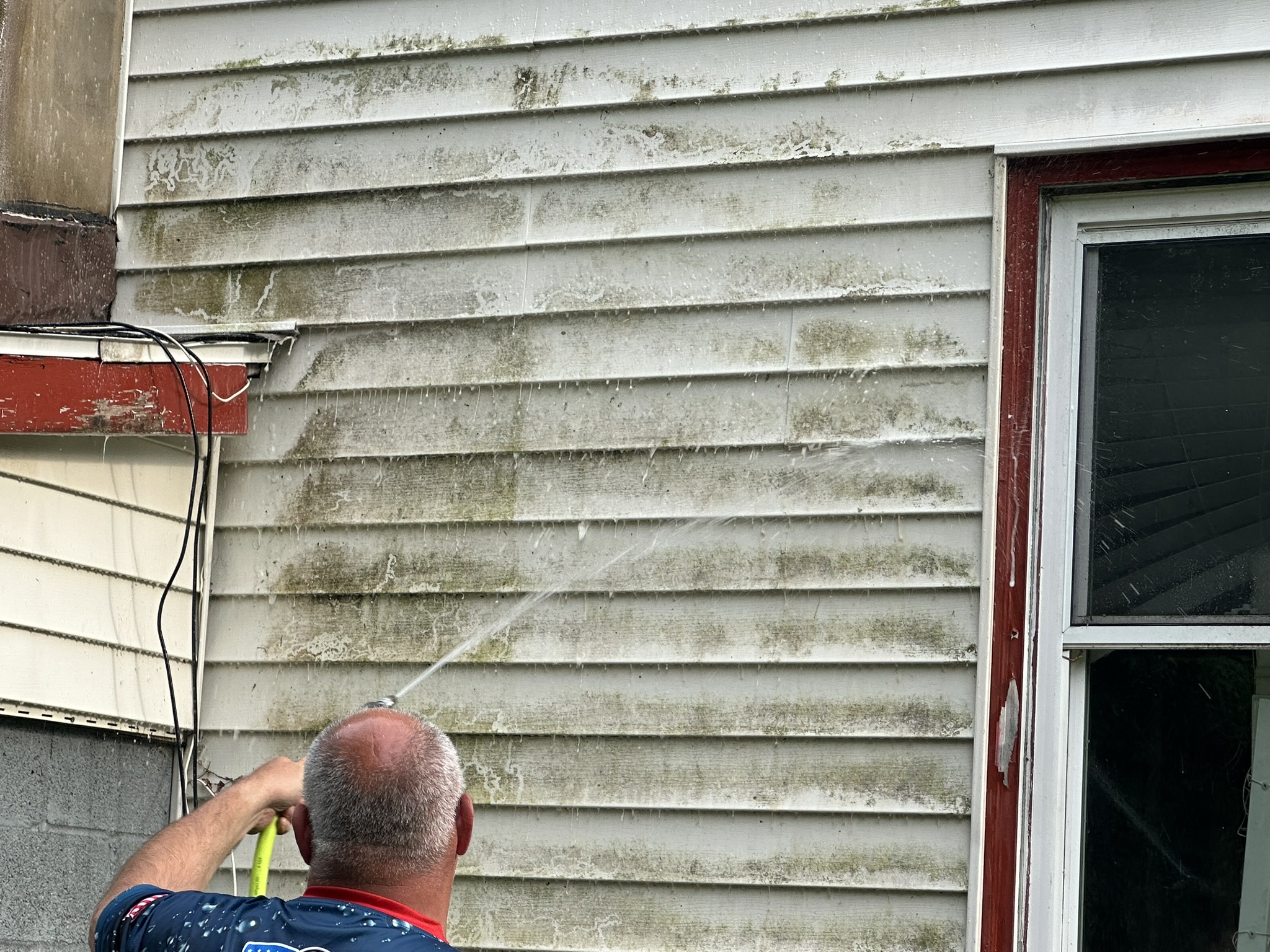
Many homeowners first notice the problem as green patches, dark streaks, black spotting, or a dull film across the siding.
Vinyl siding is especially common in the Hudson Valley, and while it is durable, it is not immune to long-term neglect.
What Happens if Mold and Algae Are Ignored?
Permanent Staining Can Develop
One of the biggest problems is staining.
Organic growth feeds on moisture and debris sitting on the surface of the siding. Over time, those stains can become much harder to remove, especially if the buildup sits for years without cleaning.
Some homeowners wait too long and assume the siding is permanently ruined when the problem may have been preventable earlier.
Oxidation Problems Become More Noticeable
Vinyl siding naturally oxidizes as it ages. That oxidation looks chalky or faded and becomes more visible when algae and mildew are left on the surface for long periods.
Many homeowners in the Hudson Valley mistake oxidation for dirt.
Improper cleaning methods can make oxidation worse, especially if someone uses too much pressure. High pressure can strip oxidation unevenly and leave visible streaks or tiger-striping across the siding.
Moisture Can Become a Bigger Problem
Organic growth usually means moisture is staying on the home longer than it should.
That extra moisture can sometimes contribute to:
Wood rot around trim areas
Problems behind loose siding
Caulking deterioration
Mold growth around windows or soffits
Premature wear on painted surfaces
The siding itself may survive, but the materials around or behind it can begin to break down if the moisture issue continues long enough.
Your Home Can Look Older Than It Really Is
A home covered in green algae or dark streaks immediately affects curb appeal.
Many homeowners do not notice how dirty their siding has become until it is professionally cleaned. In shaded Hudson Valley neighborhoods, organic buildup can slowly happen over several years and become “normal” to look at every day.
Does Mold Actually Eat Vinyl Siding?
Not exactly.
Mold and algae usually feed on organic material sitting on the siding, such as pollen, dust, dirt, tree debris, and moisture. Vinyl siding itself is not typically being consumed the way wood can rot.
However, the buildup still creates problems because it traps moisture against the surface and accelerates staining, discoloration, and deterioration around vulnerable areas.
Wood siding, trim, fascia boards, and older painted surfaces are much more vulnerable to actual material deterioration from prolonged moisture and mold exposure.
Signs Your Siding Needs Attention
Some warning signs homeowners should watch for include:
Green patches on shaded sides of the home
Black streaks or spotting
White chalky residue from oxidation
Siding that looks dull or uneven in color
Mildew smell near siding or soffits
Staining under gutters
Dark areas near downspouts
Buildup returning quickly after rain
In the Hudson Valley, north-facing siding and heavily wooded properties usually show problems first.
Can You Prevent Mold and Algae Growth?
You usually cannot stop it completely, but you can slow it down significantly.
Helpful Prevention Tips
Trim Trees and Increase Sunlight
More airflow and sunlight help siding dry faster after rain and humidity.
Homes completely surrounded by trees often develop buildup much faster than homes in open sunlight.
Keep Gutters Clean
Overflowing gutters constantly dumping water onto siding create ideal conditions for mold and algae.
Regular gutter maintenance matters more than many homeowners realize.
Wash Pollen and Debris Off Earlier
Pollen season in the Hudson Valley can leave a thick layer across homes every spring. That organic material becomes food for algae and mildew once moisture builds up.
Removing it earlier helps reduce long-term staining.
Address Drainage Issues
Poor drainage near the foundation or splashback from downspouts can keep siding damp for long periods.
Sometimes the cleaning issue is actually a water management issue.
Schedule Preventative House Washing
For many Hudson Valley homes, especially heavily shaded properties, professional house washing every 1 to 2 years helps prevent major buildup before it becomes difficult to remove.
Is Pressure Washing Safe for Moldy Siding?
Not always.
This is where many homeowners accidentally create bigger problems.
Using too much pressure on vinyl siding can:
Force water behind the siding
Cause water intrusion
Crack older siding
Damage trim
Leave oxidation marks
Create visible pressure lines
Many homeowners assume “more pressure cleans better,” but siding is usually cleaned safest with soft washing methods instead.
Soft washing uses low pressure combined with professional cleaning solutions designed to break down organic growth safely.
DIY Cleaning vs Hiring a Professional
What Homeowners Can Realistically Do
A homeowner may be able to lightly clean small areas using:
A garden hose
Soft brush on reachable areas
Mild siding-safe cleaner
Pump sprayer
Protective gloves and eye protection
Cleaning small spots early is usually much easier than dealing with years of buildup later.
Common DIY Mistakes
Some of the biggest homeowner mistakes include:
Using too much pressure
Spraying upward under siding laps
Mixing chemicals improperly
Using bleach too strong
Damaging plants
Climbing ladders unsafely
Scrubbing oxidation unevenly
If a homeowner cannot safely keep both feet on the ground, the risk usually is not worth it.
Two-story homes, steep grading, heavy oxidation, or major organic growth are often better handled professionally.
What Separates a Good Contractor From a Bad One?
Not every exterior cleaning company cleans siding the same way.
Homeowners should ask:
Do you soft wash siding?
Are you insured?
How do you protect plants?
Do you use high pressure on vinyl?
Do you have experience with oxidation?
Can you explain your process clearly?
Do you have real local reviews?
Some companies treat every surface the same and simply blast everything with pressure. That can create expensive problems later.
Extremely cheap pricing can also be a warning sign. Professional exterior cleaning involves insurance, equipment maintenance, commercial vehicle costs, proper chemicals, water management, and experience.
A good contractor should explain realistic expectations honestly, especially on older siding or heavily oxidized homes.
Local Hudson Valley Considerations
The Hudson Valley creates unique exterior cleaning challenges compared to many other areas.
Older homes in Kingston and Rhinebeck often deal with years of moisture buildup around mature trees. Homes in Woodstock and New Paltz frequently experience heavy shade and damp conditions. Properties near wooded areas in Saugerties, Red Hook, and Stone Ridge can develop algae much faster than homeowners expect.
Homes near water or dense tree lines may require more frequent maintenance simply because the environment keeps surfaces wetter longer.
This is one reason local experience matters.
If your siding has green buildup, dark streaks, or mildew stains, cleaning the problem early is usually much easier and safer than waiting until the buildup becomes severe. Freedom Powerwash uses professional soft washing methods designed to safely clean siding throughout the Hudson Valley without relying on damaging high pressure.
Request a fast, no-pressure quote today through our online form at Get Your Fast Quote Here or call/text 845-812-3222 to speak directly with Freedom Powerwash.
FAQ Section
Can algae permanently stain siding?
Yes, in some cases. Long-term buildup can leave staining or discoloration behind, especially on older or oxidized siding.
How often should siding be washed in the Hudson Valley?
Most homes benefit from washing every 1 to 2 years, but heavily shaded properties may need more frequent cleaning.
Is green siding always mold?
Not always. Many homes actually have algae, mildew, moss, or pollen-related organic buildup rather than true mold.
Can pressure washing damage vinyl siding?
Yes. Excessive pressure can crack siding, force water behind panels, and create oxidation streaks.
What side of the house usually gets dirtiest?
North-facing sides and heavily shaded areas usually develop buildup first because they stay damp longer.
Does house washing kill mold and algae?
Professional soft washing methods are designed to remove and treat organic growth rather than simply blasting the surface with pressure.
Can I clean siding with bleach myself?
Possibly, but improper chemical strength or rinsing can damage plants, surfaces, or surrounding areas. Homeowners should be careful.
Does mold on siding mean mold inside the house?
Not necessarily. Exterior organic growth is common in damp environments, but severe moisture issues should still be monitored carefully.dential homes.


