
Why Are Black Streaks Appearing on My Roof?
Why Are Black Streaks Appearing on My Roof?
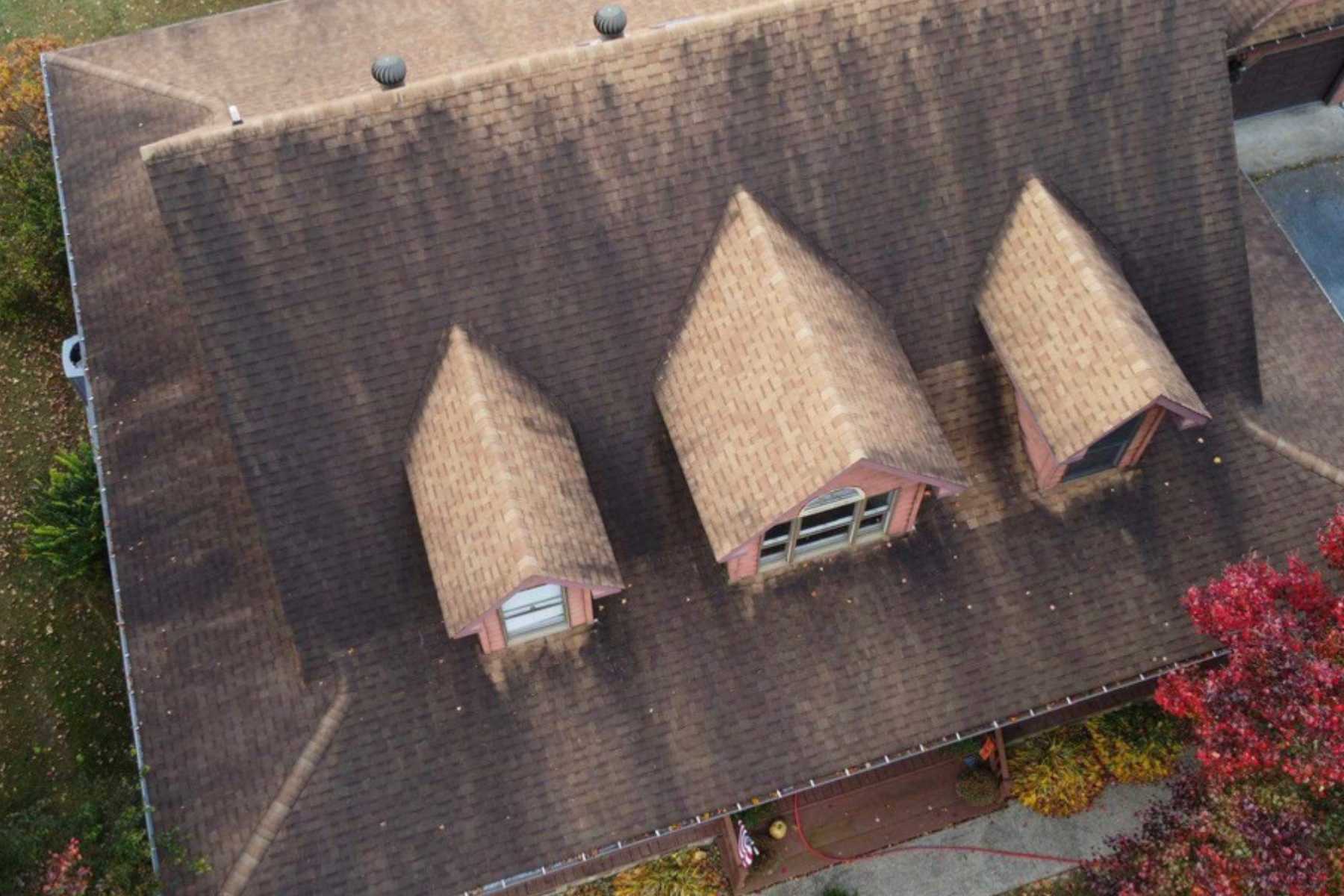
Black streaks on your roof are usually caused by a roof algae called Gloeocapsa magma. It is not just dirt, and it does not always mean your roof needs to be replaced. But it is a sign that organic growth is living on your shingles, and it should be handled the right way before it spreads.
For Hudson Valley homeowners, black roof streaks are common because our roofs deal with moisture, shade, trees, pollen, and damp seasons. The safest way to clean them is usually soft wash roof cleaning, not pressure washing.
What Are the Black Streaks on My Roof?
Most black roof streaks are caused by Gloeocapsa magma, a type of cyanobacteria often described as blue-green algae. It is known for growing on roof shingles in the United States and Canada.
On asphalt shingles, this algae usually shows up as dark streaks running down the roof. It often starts on shaded areas, north-facing roof slopes, or sections under trees.
In the Hudson Valley, this is common because many homes have:
Heavy tree coverage
Moisture from rain, snow, and morning dew
Shade from woods, hills, and nearby homes
Pollen and organic debris
Roof sections that dry slowly
Older homes with older roofing materials
The algae is not there because your home is dirty. It is there because your roof has the right conditions for growth.
Is Roof Algae Bad for Shingles?
At first, roof algae is mostly an appearance issue. It makes the roof look old, dirty, and neglected.
Over time, it can become more of a concern. Algae can hold moisture on the roof surface. That damp environment can also make it easier for moss and lichen to grow. Moss and lichen are more serious because they can lift shingles, trap water, and make the roof harder to clean safely.
The Asphalt Roofing Manufacturers Association says algae and moss on asphalt roofing can be cleaned with a bleach-and-water solution, followed by a low-pressure rinse. That is important because the roof should be treated with the right cleaning method, not blasted with high pressure.
Can Black Streaks Shorten Roof Lifespan?
Black streaks alone do not always mean your roof is failing. But ignoring them for years can create problems.
Here is what can happen:
The roof looks older than it really is
Algae spreads across more shingles
Moss and lichen may begin growing
Shingles may hold moisture longer
Buyers or inspectors may question the roof condition
Homeowners may think they need a new roof before they actually do
A stained roof can make a 10-year-old roof look like it is near the end of its life. That can hurt curb appeal and make the home look less maintained.
The good news is that many stained roofs can be cleaned safely. A proper roof cleaning can often improve the look of the roof without replacing it.
Can Black Streaks Affect Insurance or Property Value?
Yes, they can.
Insurance companies care about roof condition because the roof protects the home. A roof covered in black streaks, moss, or heavy organic growth can look neglected, even if the shingles still have life left.
That does not mean every stained roof will cause an insurance problem. But it can raise questions during inspections, especially if there is moss, lifting shingles, missing shingles, soft spots, or heavy buildup.
For property value, the issue is simple: people judge the roof fast. If the roof looks stained and worn out, buyers may assume the home has not been maintained. Even if the roof is still in decent shape, black streaks can make the whole property look older.
If you are selling your home, refinancing, dealing with insurance, or just trying to protect curb appeal, roof cleaning may be worth looking into.
Why You Should Not Pressure Wash a Roof
A roof should never be cleaned like a driveway.
Pressure washing asphalt shingles can:
Remove protective granules
Force water under shingles
Damage flashing
Shorten roof life
Cause leaks
Create bigger problems than the stains
Those small granules on your shingles help protect the roof from sun, weather, and wear. Once they are stripped away, they do not grow back.
That is why black streaks should be treated with soft washing, not high pressure.
How Soft Wash Roof Cleaning Works
Soft washing uses cleaning solution and low pressure to kill the organic growth. The goal is not to blast the stain off the roof. The goal is to treat the algae safely so the roof can clean up without damaging the shingles.
A proper soft wash roof cleaning usually includes:
1. Roof inspection
Before cleaning, the roof should be checked for damaged shingles, loose flashing, heavy moss, clogged gutters, and areas where water could enter.
2. Property protection
Plants, siding, windows, painted surfaces, gutters, and nearby landscaping need to be protected. This may include pre-wetting plants, controlling runoff, and rinsing sensitive areas.
3. Low-pressure application
A roof-safe cleaning solution is applied with low pressure. The solution does the work, not force.
4. Dwell time
The cleaning solution needs time to treat the algae. ARMA guidance explains that cleaning solutions should sit long enough to work but should not be allowed to dry completely before rinsing.
5. Gentle rinse or natural rinse
Depending on the roof, the condition, and the cleaning plan, the roof may be gently rinsed with low pressure or allowed to rinse naturally with rain over time.
6. Final cleanup
After the roof is treated, surrounding areas should be checked and rinsed as needed. This includes gutters, siding, plants, walkways, and any runoff areas.
Can Freedom Powerwash Give a Roof Cleaning Price Without Seeing the Roof in Person?
In many cases, yes.
Freedom Powerwash can often provide a roof cleaning estimate without an in-person visit by using online tools like Google satellite images, Google Earth, or Google Maps to measure the roof. Ground-level photos can also help us understand the roof pitch, staining, algae growth, moss, lichen, access points, and overall condition.
This helps homeowners get answers faster without waiting for someone to stop by just to take basic measurements.
That said, some homes do need an in-person estimate. If the roof cannot be clearly seen from Google satellite images, Google Earth, or Google Maps, or if the photos do not show the pitch and roof condition well enough, we will need to see the property in person before giving an accurate price.
The goal is simple: give you a fair, honest estimate without wasting your time or guessing.
Can a Homeowner Clean Roof Streaks Themselves?
Sometimes, but roof cleaning is one of those jobs where safety matters more than saving money.
A homeowner can usually do a few safe things from the ground:
Look at the roof and take photos
Note where the black streaks are
Check if there is moss or lichen
Keep gutters flowing
Trim back branches where possible
Keep leaves and debris from building up
But if you need to climb a ladder, walk on the roof, or spray chemicals above your head, it is usually smarter to hire a professional.
If your feet cannot stay safely on the ground, it is usually not worth the risk.
That is especially true for two-story homes, steep roofs, wet shingles, or homes with landscaping close to the drip line.
Common Roof Cleaning Mistakes
The biggest mistakes homeowners make are:
Pressure washing shingles
Scrubbing shingles with a brush
Using random store-bought chemicals
Letting cleaner dry on the roof
Ignoring plant protection
Walking on steep or wet shingles
Cleaning without checking roof condition first
Waiting until algae turns into heavy moss or lichen
Assuming the roof needs replacement before cleaning is considered
A dirty roof is not always a bad roof. Sometimes it just needs the right cleaning method.
Why Black Streaks Are So Common in the Hudson Valley
Hudson Valley roofs deal with a lot of moisture.
In places like Kingston, Saugerties, New Paltz, Woodstock, Rhinebeck, Poughkeepsie, Catskill, and Stone Ridge, many homes sit near trees, wooded lots, hills, and shaded areas. That creates the perfect setup for algae.
North-facing roof slopes often get black streaks first because they dry slower. Roof sections under trees also hold more moisture and collect more organic debris.
Once algae gets established, it can spread across the roof and make the home look older than it is.
Freedom Powerwash provides roof cleaning and serves Hudson Valley communities through dedicated service and local area pages on the company website.
When Professional Roof Cleaning Makes Sense
Professional roof cleaning makes sense when:
The roof has long black streaks
Moss or lichen is starting to grow
The roof is steep
The home is two stories or taller
The house is surrounded by trees
You are selling the home
Insurance has asked about the roof
You want to improve curb appeal
You are not sure if the staining is algae, moss, or roof damage
A good contractor should explain the process clearly, protect your property, and use low pressure.
If someone says they are going to pressure wash your shingles, that is a red flag.
Contractor Red Flags
Be careful if a roof cleaner:
Wants to use high pressure on shingles
Does not mention plant protection
Cannot explain the cleaning solution
Does not inspect or review the roof first
Promises every stain will disappear instantly
Walks all over brittle shingles without care
Gives a price without measuring the roof, reviewing the pitch, checking photos, or understanding the roof condition
Treats roof cleaning like driveway cleaning
A good contractor does not always need to stand in your driveway to give a price, but they do need a real way to measure and evaluate the roof.
For many homes, satellite measurements and clear ground photos are enough. For homes hidden by trees, poor map visibility, steep angles, or unclear access, an in-person estimate is the smarter and more honest option.
Bottom Line
Black streaks on your roof are usually algae, not dirt. In the Hudson Valley, they are common because of shade, moisture, trees, pollen, and seasonal weather.
The good news is that many stained roofs can be cleaned safely with a soft wash process. The bad news is that pressure washing can damage shingles and shorten roof life.
If your roof has black streaks, the smart move is to have it looked at before the growth gets worse.
Freedom Powerwash helps Hudson Valley homeowners clean black roof streaks safely using soft wash roof cleaning methods. In many cases, we can provide a price using satellite roof measurements and ground photos. If the roof cannot be clearly reviewed online or through photos, we will recommend an in-person estimate so the price is accurate.
FAQ
Are black streaks on my roof mold?
Usually, no. Most black streaks on asphalt shingles are roof algae, commonly linked to Gloeocapsa magma.
Will roof algae go away on its own?
Usually not. Rain may lighten it slightly, but algae often keeps spreading if the roof stays shaded and damp.
Can I pressure wash black streaks off my roof?
No. Asphalt shingles should not be pressure washed. High pressure can remove granules, force water under shingles, and damage the roof.
Does roof cleaning damage shingles?
Not when done correctly. Soft washing uses low pressure and the right cleaning solution. The goal is to kill the algae without damaging the shingles.
Can you give me a roof cleaning estimate without coming to my house?
In many cases, yes. Freedom Powerwash can often measure the roof using Google satellite images, Google Earth, or Google Maps. Ground photos help us understand roof pitch, staining, access, and condition. If the roof cannot be seen clearly online or the photos are not enough, we will need an in-person estimate.
How often should a roof be cleaned in the Hudson Valley?
It depends on shade, trees, roof age, moisture, and how fast algae comes back. Some homes may need cleaning every few years, while heavily shaded homes may need more regular maintenance.
Should I clean my roof before selling my home?
Yes, if the roof has visible staining. A clean roof can make the home look better cared for and may reduce buyer concerns during showings or inspections.


